Wondering how much food costs in Germany? Whether you’re planning a trip, moving, or just curious, knowing the prices can save you money and stress.
You might be surprised at how affordable—or expensive—some items can be. You’ll get clear, straightforward answers about everyday food prices. By the end, you’ll feel confident about your budget and ready to enjoy delicious meals without breaking the bank. Keep reading to discover the real cost of food in Germany!

Credit: www.reddit.com
Grocery Store Prices
Grocery store prices in Germany are generally affordable and varied. Many options fit different budgets. Shoppers find good deals on everyday items. Prices depend on the store type and location.
Discount supermarkets offer lower prices but smaller selections. Larger chains provide more variety at higher costs. Seasonal changes affect fresh produce prices. Understanding typical costs helps plan your shopping better.
Common Staples Costs
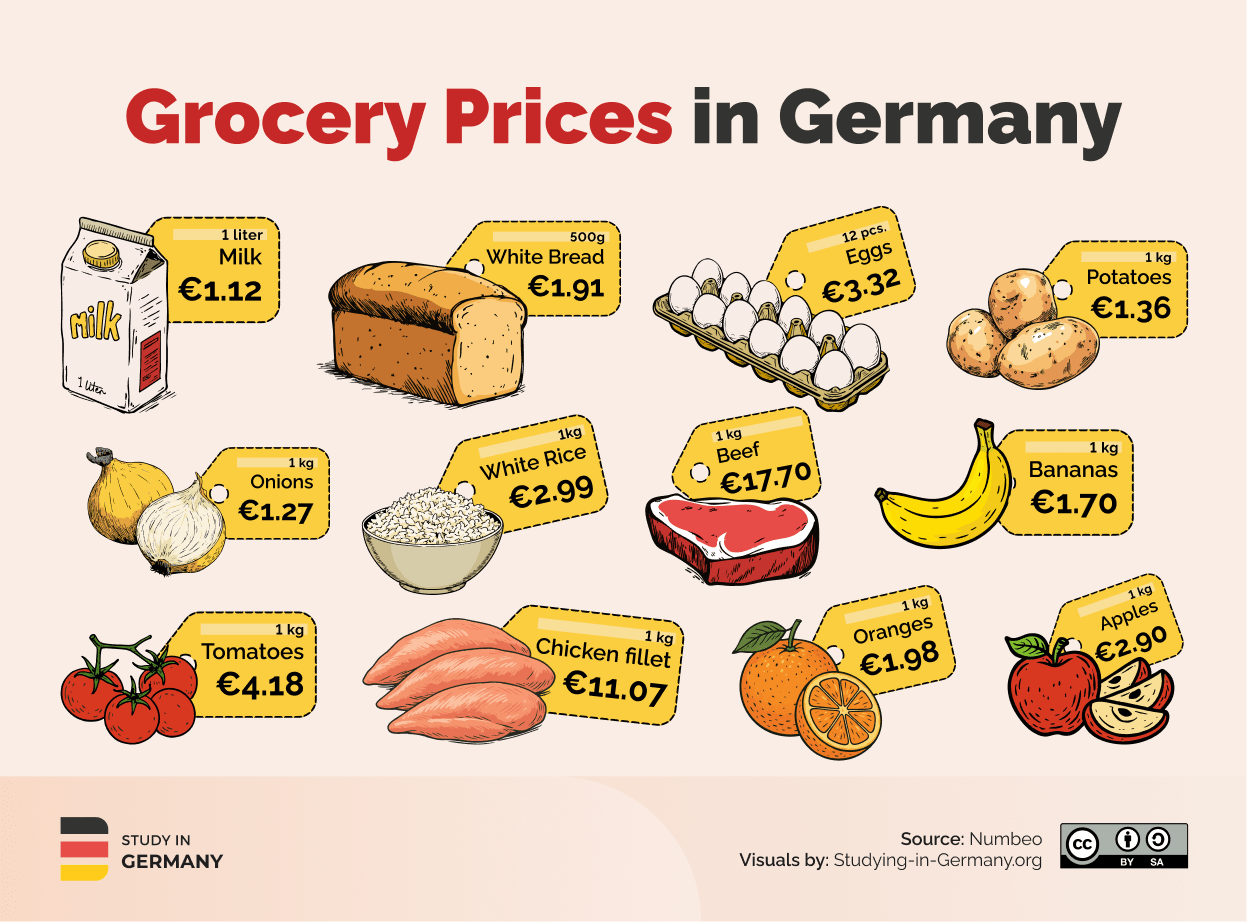
Bread is a daily essential, costing about €1.50 to €3.00 per loaf. A kilogram of rice or pasta costs between €1.00 and €2.50. Basic cooking oil ranges from €1.50 to €3.00 per bottle. Potatoes, a staple, usually cost around €1.00 per kilogram. These items form the base of many meals.
Meat And Seafood Prices
Meat prices vary by type and cut. Chicken breasts cost about €5.00 to €7.00 per kilogram. Pork is priced between €4.00 and €6.00 per kilogram. Beef tends to be pricier, from €7.00 to €12.00 per kilogram. Fresh fish and seafood prices start at €6.00 per kilogram. Frozen seafood can be cheaper.
Fresh Produce Rates
Fruits like apples and bananas cost around €1.50 to €2.50 per kilogram. Seasonal vegetables are cheaper, often under €2.00 per kilogram. Tomatoes, carrots, and onions are affordable year-round. Organic produce costs 20-30% more than regular items. Farmers’ markets offer fresh options but at higher prices.
Dairy And Eggs
Milk prices range from €0.70 to €1.20 per liter. Cheese varies widely; soft cheese costs about €7.00 per kilogram. Butter prices are near €1.50 to €2.50 per 250 grams. Eggs usually cost €1.50 to €3.00 for a dozen. Organic dairy products tend to be more expensive.
Beverage Expenses
Water is inexpensive, often under €0.30 per liter. Soft drinks cost between €0.50 and €1.50 per bottle. Coffee prices vary but average €3.00 to €5.00 for a 500-gram pack. Beer is popular and costs around €0.80 to €1.50 per bottle. Wine prices start at about €3.00 per bottle in supermarkets.
Eating Out Costs
Eating out in Germany offers many choices for every budget. Prices vary depending on the type of restaurant and location. Dining costs can fit both tight budgets and special occasions. Understanding average prices helps you plan your meals better during your stay.
Budget-friendly Options
Small cafes and local snack bars serve affordable meals. Expect to pay around 5 to 10 euros for a simple dish. Popular budget foods include currywurst, pretzels, and sandwiches. Many places offer daily specials at lower prices. These spots are perfect for quick, cheap meals without sacrificing taste.
Mid-range Restaurant Prices
Mid-range restaurants charge between 10 and 25 euros per main course. You can find traditional German dishes and international cuisine here. Many restaurants include side dishes or salads with your meal. This range suits travelers wanting a full dining experience without overspending. Service quality and atmosphere are usually comfortable and friendly.
High-end Dining Costs
High-end restaurants often cost 50 euros or more per person. These places offer gourmet meals and fine wines. Expect elegant settings and top-notch service. Special occasions or business dinners often happen here. It is an investment in taste and ambiance for memorable dining.
Fast Food And Takeaway
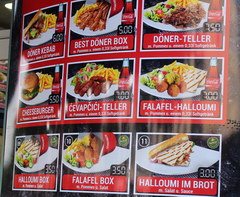
Fast food chains and takeaway shops offer quick meals from 3 to 7 euros. Popular options include burgers, döner kebabs, and pizza slices. These meals are convenient for busy days or late nights. Many locals enjoy fast food for its affordability and speed. A good choice when you want food on the go.
Regional Price Variations
Food prices in Germany differ from one region to another. These differences depend on local demand, supply, and living costs. Understanding these variations helps plan your budget better. You will see clear price gaps between cities and countryside.
Prices In Major Cities
Major cities like Berlin, Munich, and Hamburg usually have higher food prices. Rent and wages in these cities are higher, so shops raise prices. Eating out also costs more in city centers. Supermarkets in big cities may offer deals, but basic items remain pricier.
Costs In Rural Areas
Rural areas tend to have lower food prices than cities. Local markets and smaller stores offer fresh products at cheaper rates. Less demand and lower rent keep costs down. Eating out in villages or small towns is often affordable. Rural shopping can save you money on daily groceries.
Credit: www.globalprice.info
Seasonal Price Fluctuations
Food prices in Germany change throughout the year. These changes depend on the seasons. Seasonal price fluctuations affect many food items. Prices can rise or fall based on supply and demand. Knowing these changes helps shoppers plan their budget better.
Impact On Fruits And Vegetables
Fruits and vegetables show the biggest price changes. Local produce costs less during its harvest season. For example, strawberries are cheaper in summer. In winter, imported fruits cost more. Fresh vegetables grown in greenhouses also cost more in cold months.
Buying seasonal fruits and vegetables saves money. Stores often reduce prices on items in peak season. Off-season produce is pricier due to transport and storage costs.
Holiday Season Effects
Prices rise around holidays like Christmas and Easter. Demand for special foods increases. Meat, sweets, and baking ingredients cost more. Stores stock up early, so prices start rising weeks ahead.
Holiday discounts are common but may not offset higher base prices. Planning purchases before holiday price hikes can save money. Seasonal price changes impact many grocery items during these times.
Tips To Save On Food
Saving money on food in Germany is possible with smart choices. Knowing where and how to shop helps reduce costs. Simple habits can make a big difference in your monthly food bill.
Shopping At Discount Stores
Discount stores like Aldi, Lidl, and Penny offer good quality products at lower prices. These stores focus on essential items without fancy packaging. Shopping here helps cut down your grocery expenses quickly.
Buy store brands instead of big-name products. They cost less but taste just as good. Check weekly deals and special offers to save even more.
Using Local Markets
Local markets are great for fresh fruits and vegetables. Prices at markets are often lower than supermarkets, especially near closing time. Vendors may reduce prices to avoid waste.
Talking to sellers can lead to better deals. Buying in small amounts keeps food fresh and reduces waste. Markets also offer seasonal and regional products that are cheaper.
Seasonal Buying Strategies
Buy fruits and vegetables that are in season. Seasonal produce costs less and tastes better. Avoid imported items that are expensive and less fresh.
Plan meals around seasonal foods to save money. Preserve excess fruits and vegetables by freezing or making jams. This extends your food supply and lowers costs.
Credit: www.studying-in-germany.org
Comparing Food Costs Internationally
Understanding food costs in different countries helps plan budgets better. Comparing prices across borders shows where money goes further. It also gives insight into daily life and spending habits worldwide.
Germany Vs Neighboring Countries
Food prices in Germany are moderate compared to neighbors. In France, fresh produce and dining out tend to be pricier. Poland offers lower costs, especially for fruits and vegetables. The Netherlands has similar prices to Germany but higher costs for eating out. Austria’s grocery bills often match Germany’s, with some items more expensive. Traveling between these countries shows clear differences in food affordability.
Germany Vs Global Averages
Germany’s food costs sit near the global middle range. Compared to the United States, groceries are generally cheaper in Germany. Compared to many Asian countries, Germany’s food can be more expensive. In developing countries, food costs tend to be lower than in Germany. These comparisons reveal how economic factors affect daily expenses worldwide.
Frequently Asked Questions
How Much Does Eating Out Cost In Germany?
Eating out in Germany typically costs between €10 and €25 per meal. Prices vary by city and restaurant type. Fast food and casual dining are cheaper, while fine dining is more expensive. Budget travelers can find affordable options in local markets and street vendors.
What Is The Average Grocery Bill In Germany?
The average grocery bill for one person in Germany ranges from €150 to €250 per month. This depends on dietary preferences and location. Buying local and seasonal products helps reduce costs. Supermarkets like Aldi and Lidl offer budget-friendly groceries.
Are German Food Prices Higher In Big Cities?
Yes, food prices in big cities like Berlin and Munich are generally higher than in smaller towns. Urban areas have more dining options but tend to charge more. However, budget-friendly eateries and grocery stores are still available in cities.
How Much Do Typical German Meals Cost?
A typical German meal costs around €5 to €15 in casual restaurants. Traditional dishes like bratwurst and schnitzel are affordable. Street food and bakery items are even cheaper, ideal for quick, budget-friendly meals.
Conclusion
Food prices in Germany vary but stay reasonable for most budgets. Fresh produce and staples cost less in local markets than supermarkets. Dining out can be affordable, especially at small restaurants or bakeries. Planning meals and shopping smart helps save money.
Knowing typical costs makes living or traveling easier here. Enjoy the rich flavors without worrying too much about expenses. Germany offers good value for tasty and healthy food. Simple choices lead to better savings and a happy experience.